Wood costs less up front: $20 to $50 per foot installed, against $30 to $60 for vinyl, in the national figures. Vinyl needs no sealing. In Tucson the bigger question is the sun, which is hard on both, and that is why many owners here end up with steel or block.
Price ranges are national figures published by HomeGuide for 2026, not our own quotes. Tucson labor, material prices and the ground on your lot move the real number up or down. Last checked October 2026.
| Wood | Vinyl | |
|---|---|---|
| Installed cost per foot | $20 to $50 | $30 to $60 |
| Upkeep | Seal or stain regularly against sun | Wash off dust |
| Weak point | Drying, cracking, warping, termites | UV and heat age low-grade vinyl |
| Repairs | One board at a time | Usually the whole panel |
| Look | Natural, any stain color | Uniform, limited colors |
Cedar or pressure-treated pine?
Cedar moves less as it dries and resists insects and decay without treatment, so it stays flatter and better looking in dry heat. Pressure-treated pine costs less and is treated against termites and rot, but it tends to twist and check as it dries out in the sun. Cedar boards on galvanized steel posts is a common build in Tucson.
Which fence lasts longest in desert sun and monsoon storms?
Steel, aluminum and masonry last longest here, because sun does not dry them out and termites do not eat them. Freeze and thaw is not a factor in Tucson. Among wood fences, the one that lasts is sealed, kept away from sprinklers and hung on steel posts. If you choose vinyl, ask for a product made with UV inhibitors and avoid dark colors, which hold more heat.
What type of fence is best for my yard?
| You want | Good choices | Keep in mind |
|---|---|---|
| Privacy | 6-foot wood, vinyl or a block wall | Solid panels catch monsoon wind |
| A large dog | 5 or 6 foot chain link, steel or wood | Leave no gap at the bottom |
| Small children | A solid or narrow-picket fence with a self-latching gate | Set the latch high |
| A pool | Steel or aluminum built to A.R.S. 36-1681 | 5-foot height and gate hardware are inspected |
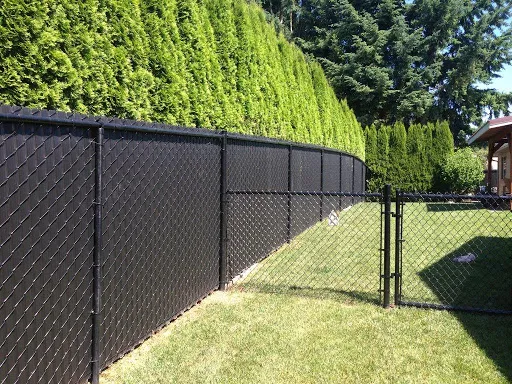
| Lowest cost | Chain link or wire field fence | Slats or screen add privacy |
| Low upkeep | Powder-coated steel, aluminum or vinyl | Costs more at the start |
| Keeping javelina and coyotes out | Tall fence or wall with a tight bottom edge | Coyotes climb and jump, javelina push under |
| Keeping the view | Open steel or aluminum view fence | Often what an HOA requires |
Is aluminum fencing strong enough for a large dog?
For most dogs it is. What matters more is how tall the fence is and how far apart the pickets are. A dog that jumps needs extra height. A small dog needs tight spacing near the ground. Aluminum pickets also get hot in direct summer sun, as any metal does.
We have a large dog, want privacy and do not want to spend a fortune. What makes sense?
Put a 6-foot solid fence only where you need to block a view, and use chain link elsewhere. If the lot already has a block wall on some sides, you only pay to close the open ones. Privacy slats in chain link are another low-cost route for the sides that face a neighbor.
My neighbor has wood and wants me to match it so we can split the cost. I want vinyl.
A shared run can only be one material, so you both have to pick one for that side and write down who pays what. Arizona law does not force either of you to share the cost. If you cannot agree, build the fence you want just inside your own line at your own expense, and use any material on your other sides.
Will the new fence look the same on my neighbor's side?
That depends on the style. Shadowbox, board-on-board, most vinyl and ornamental steel look alike from both sides. A plain board fence has a rail side and a finished side. Decide with your neighbor which way it faces, and check whether your HOA or city has a rule on it.
Only a visit to your property gives a real number. The estimate is free. Call (520) 462-4332 or text us a photo of the fence line.